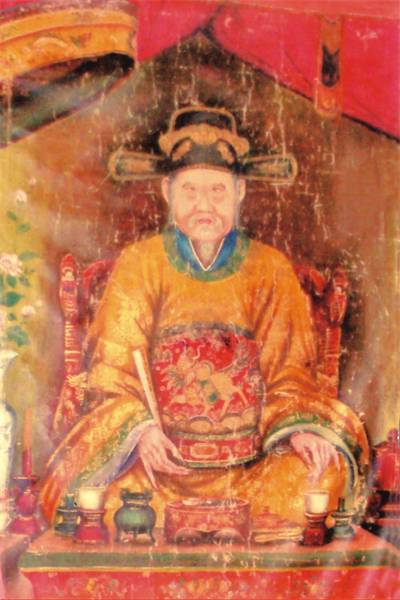
The current temple was built on the very foundation of the ancient house — where Mr. Phùng Khắc Khoan was born, grew up, and once opened a school named Hoàng đạo thư đường. After his death, the court and his clan established a temple for worship, which underwent several major renovations during the Nguyễn dynasty (the first Duy Tân year - 1907).
Overall space: The relic site has spacious grounds with a brick courtyard, a fish pond, and solid enclosing walls. Right at the entrance are two tall pillars decorated with majestic kneeling nghê (mythical lion-like creatures).
Architectural layout: The temple is designed in the shape of the character “Nhị” (二), consisting of two parallel buildings: the Bái đường (worship hall) in front and the Hậu từ (rear shrine) behind. The system of columns and beams is made of sturdy lim wood, combined with carved panels of cloud, dragon, and floral motifs strongly imbued with the architectural art of the Later Lê and Nguyễn periods.
3. A “museum” of priceless artifacts in real life
What makes the unique value of Trạng Bùng Temple is its rich system of antiquities, turning this place into a miniature museum of a celebrated figure:
Royal edicts and documents: The temple still preserves many royal edicts bestowed by feudal dynasties, along with the book Phùng tướng công phụng Bắc sứ ký, which records his glorious diplomatic mission.
Sacred relics: Three ancient silk portrait paintings of Mr. Phùng Khắc Khoan, along with a pair of staffs mounted with deer antlers — relics closely associated with the life of the Mai Quận công.
Ancient stone steles: The steles Học điền bị ký (1897) and Từ đường bi ký (1928) record the temple’s worship customs and land, evidence of the enduring reverence of local people over many centuries. Not far from the temple relic is the tomb area of Trạng Bùng, lying peacefully in the village’s residential area.
4. A meaningful cultural and spiritual destination
Every year, on anniversaries of Trạng’s birth or death (especially the memorial incense-offering ceremony in autumn), crowds of generations of Phùng descendants, Thạch Thất residents, and pilgrims from everywhere gather here. The temple has become a symbol of the spirit of studiousness, the will to overcome difficulties, and the patriotism and compassion for the people of the Đoài region.
Visiting Trạng Bùng Phùng Khắc Khoan Temple, walking under the shade of the temple courtyard, and listening to legends about the sage who changed the fate of Vietnamese maize, we seem to be rekindled with the flame of wisdom and deep national pride.