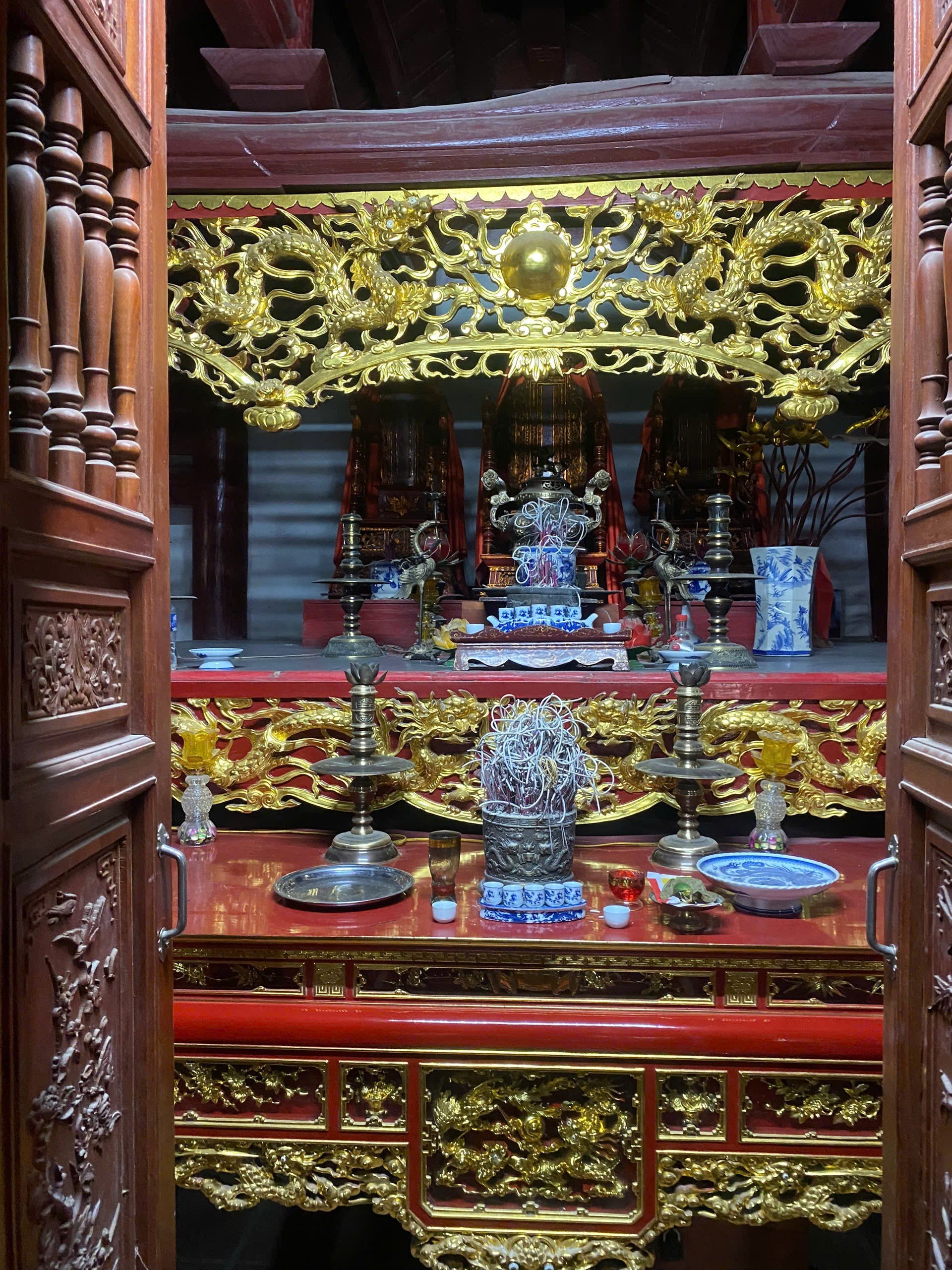
Nguyen Khe Communal House
Story
01Nguyen Khe Communal House
Nguyen Khe Communal House is located in Nguyen Khe Hamlet, Phuc Thinh Commune, Hanoi City.
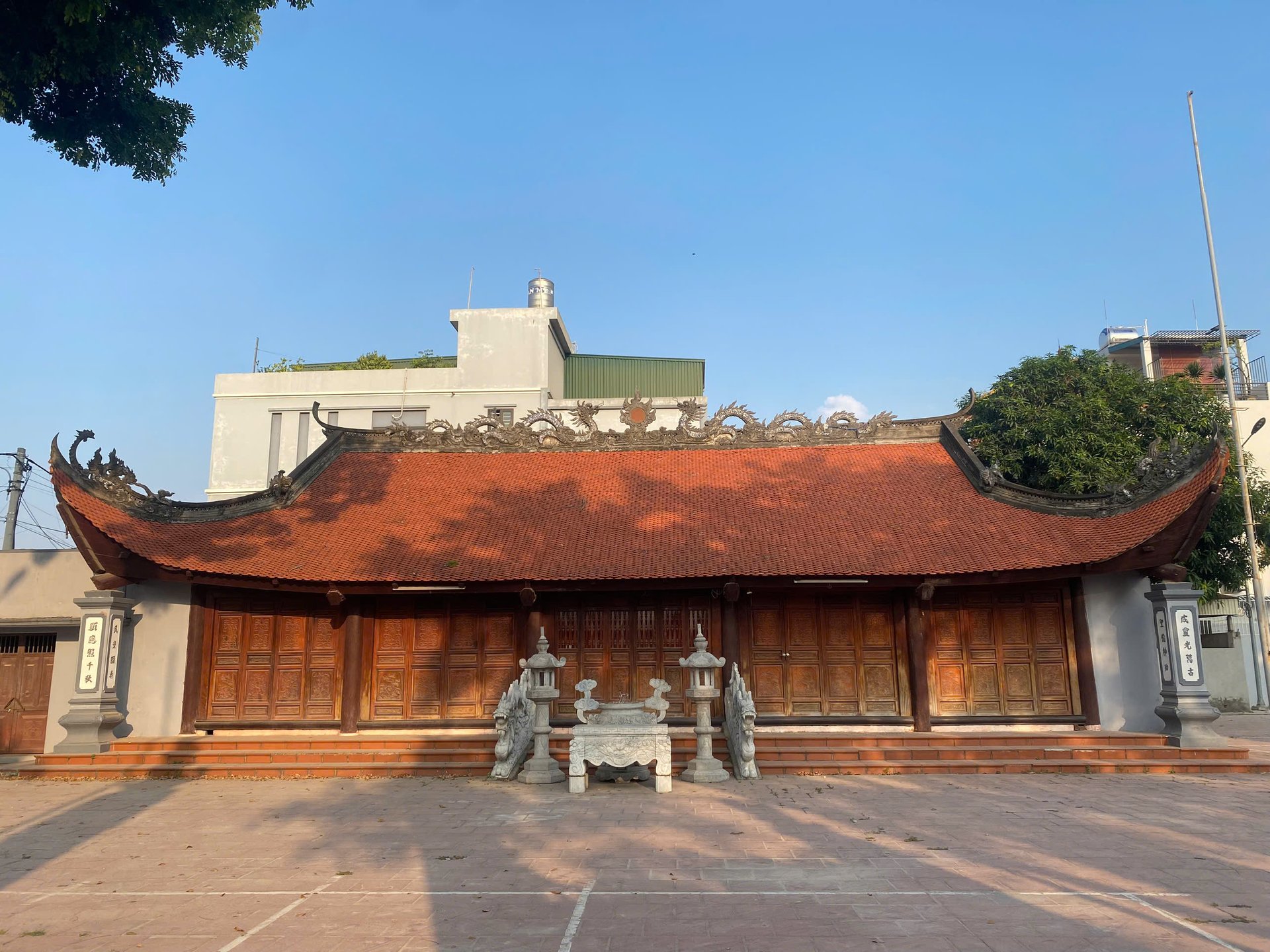
Nguyen Khe Communal House is an ancient communal house built long ago; it is a cultural and religious work with a long history and a tradition of national construction and defense. Currently, the relic no longer preserves accurate written documents about the year of its founding. However, based on the architecture and remaining artifacts such as deity legends, parallel sentences, horizontal plaques, and the date line engraved on a stone stele bearing the Canh Hung era (1740-1786), it can be concluded that the communal house was built around the Later Le period, at the end of the 18th century. According to local folk legend, the communal house dates from the Ly dynasty and once kept many royal edicts, but these edicts no longer exist.
According to the accounts of elders, the former communal house was grand in scale, consisting of five bays with two side wings, built of lim wood with a system of large columns. The communal house is located on a high, wide plot in the center of the village; in front is the communal pond, and behind is the quan pond. Around the communal house are other cultural and religious works such as a pagoda, temple, and van chi, forming a complex of traditional cultural space characteristic of Vietnamese villages in the Northern Delta.
During the resistance war against the French, Nguyen Khe Communal House was associated with important historical events of the locality. In 1945, during the August Revolution movement, the communal house was where local people gathered with workers of Dong Anh Railway Factory to hold a rally and march, participate in seizing power, and confiscate the seal of the district mandarin. At the end of 1947, during a French sweep, the village's communal house and temple were burned and destroyed, causing many architectural traces and historical documents to be lost. The devastation of war left deep sorrow in the hearts of the people, and also urged generations of descendants to restore the place of worship, preserve tradition, and remember the merits of their ancestors.