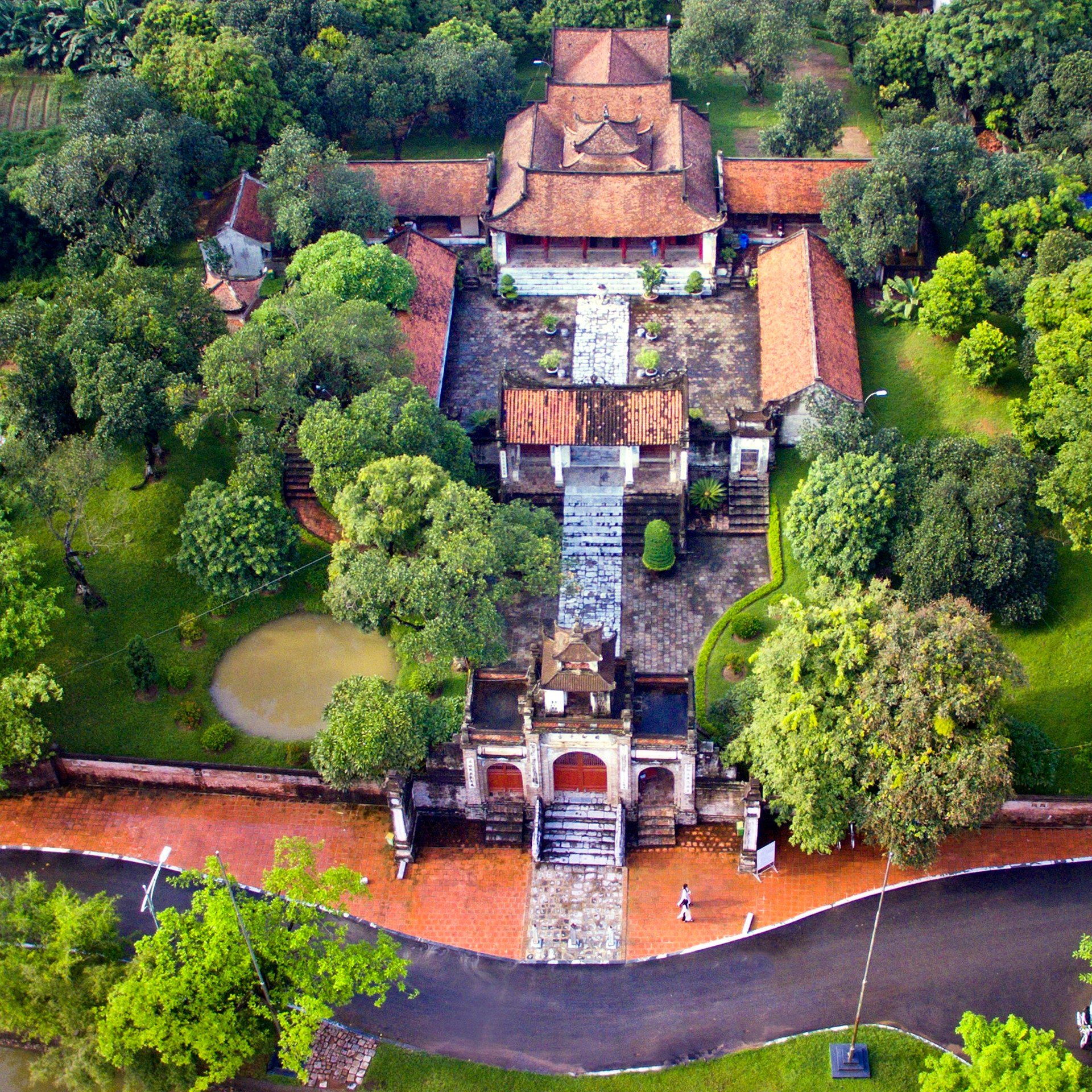
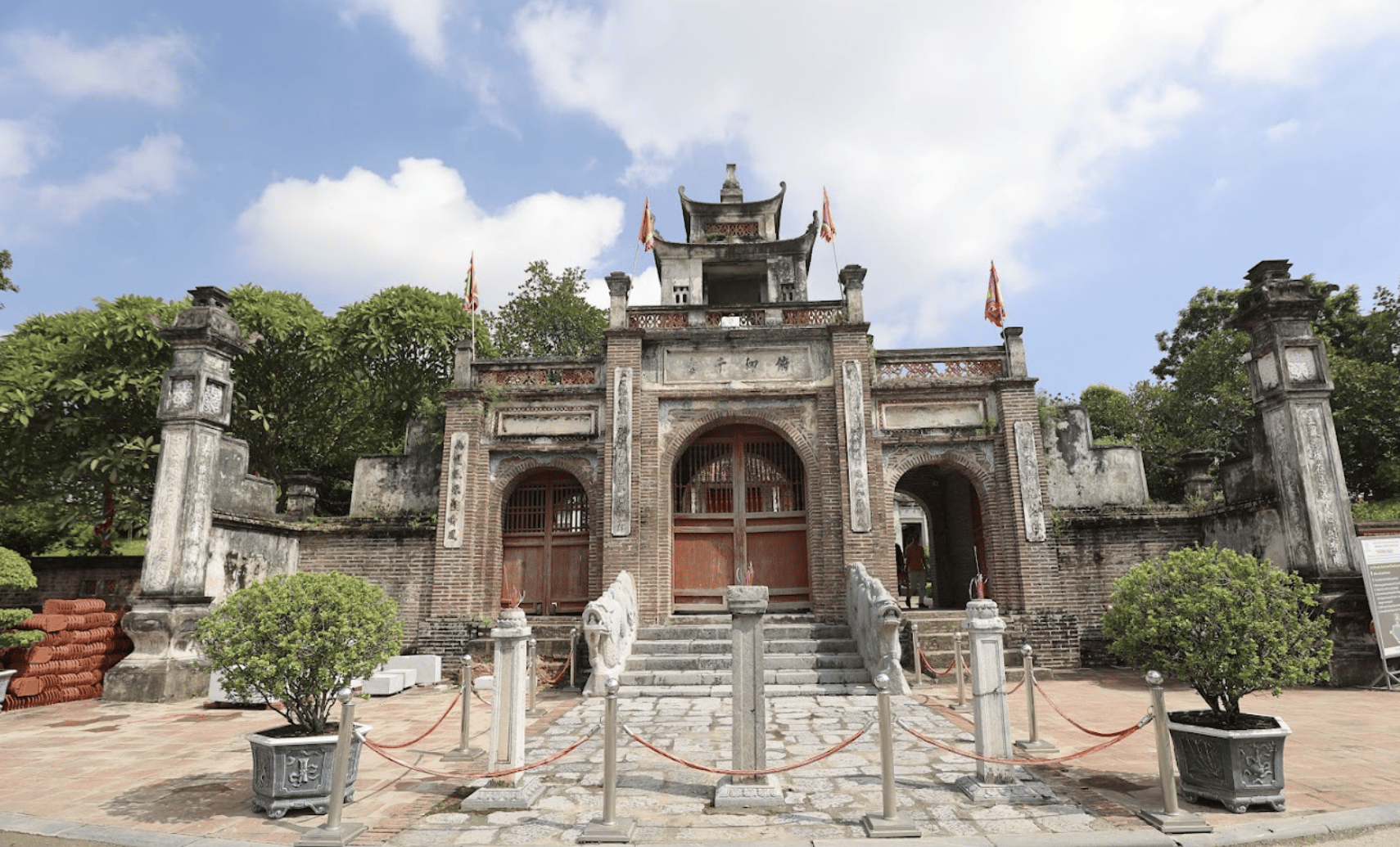
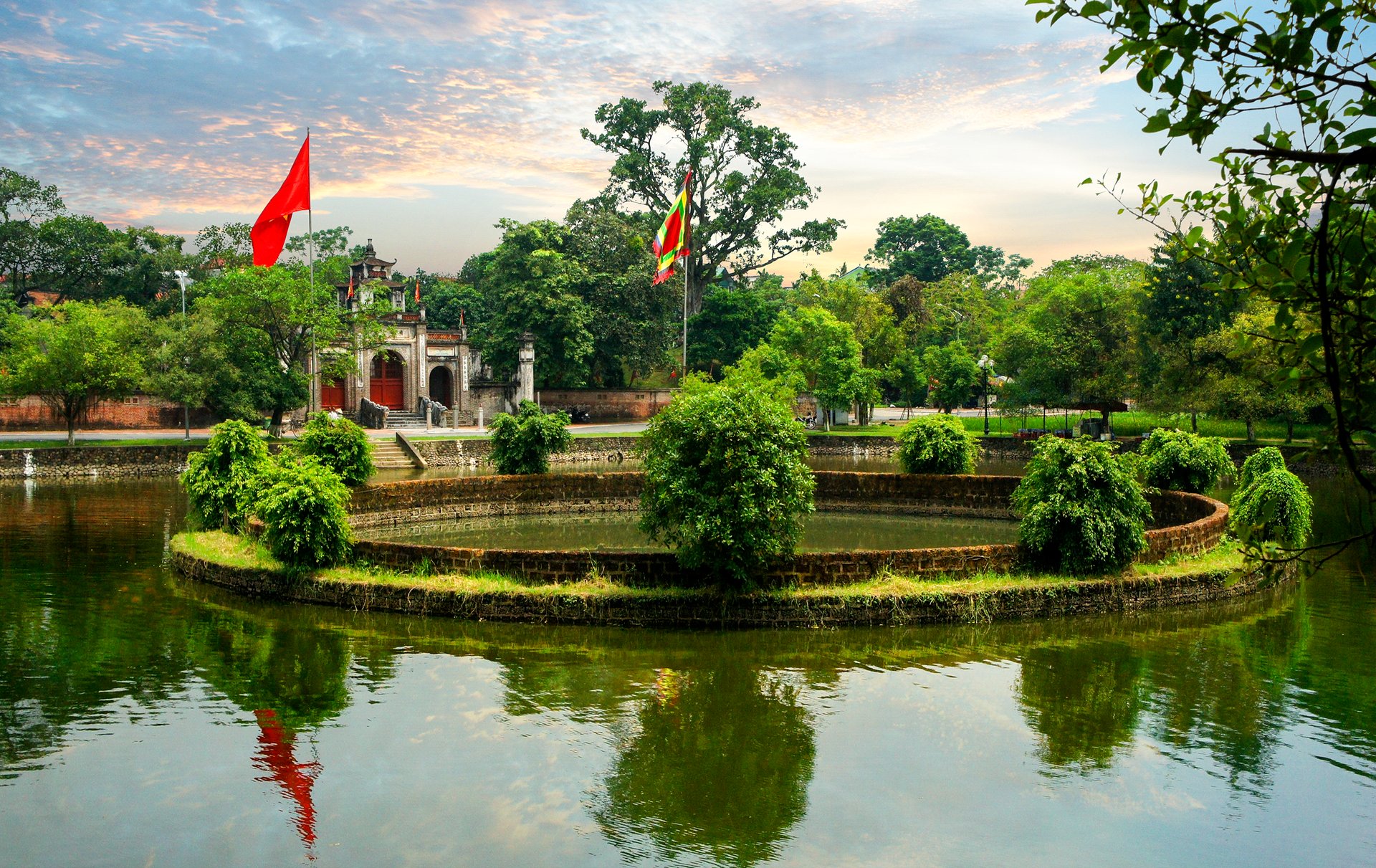
Continuing into the Inner Citadel, Ngự Triều Di Quy Communal House appears as a link between the ancient citadel space and later cultural life. The building is associated with the former royal court hall and features a gate, ceremonial curtains, and carved panels on wooden structural elements.
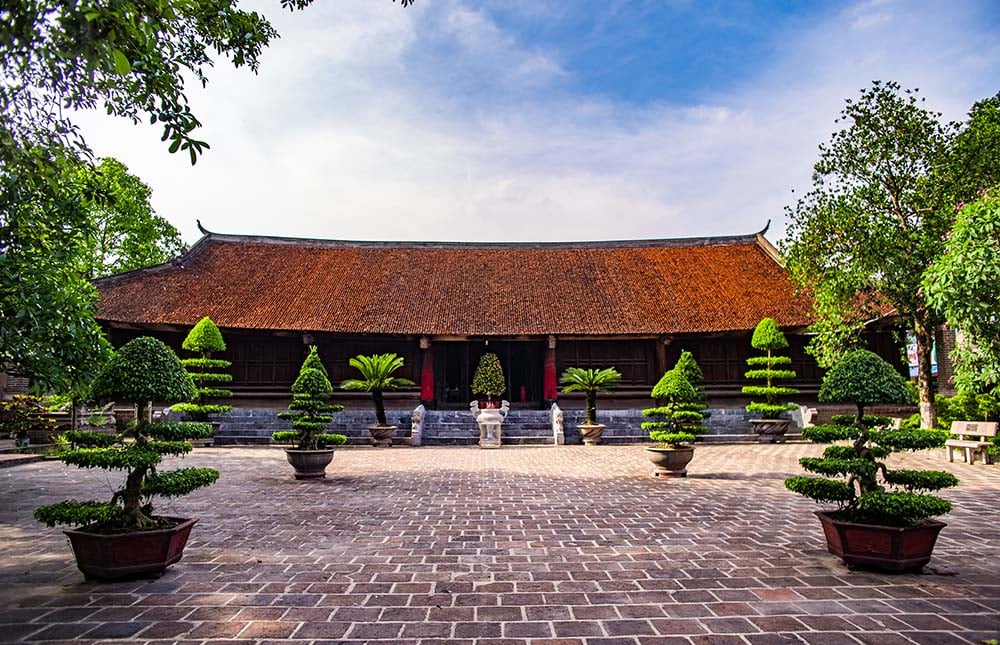
Ngự Triều Di Quy Communal House was built in 1907 on the foundation of Cổ Loa's former royal court hall
Alongside its tangible relic system, Cổ Loa also preserves many intangible cultural values maintained by the community through generations. The Cổ Loa Festival is a typical traditional cultural activity, expressing remembrance of An Dương Vương and the historical and cultural values associated with this land. Communal houses, temples, shrines, and small temples and community belief practices continue to create a rich cultural life for the relic site.
Today, the Cổ Loa Relic Site is a suitable destination for sightseeing, learning about history and culture, research, heritage education, and exploring traditional Vietnamese village space. From the earthen ramparts and water moats to temples, communal houses, shrines, small temples, and archaeological artifacts, each layer of heritage at Cổ Loa helps tell the story of a land that once held an important position in Vietnamese history.