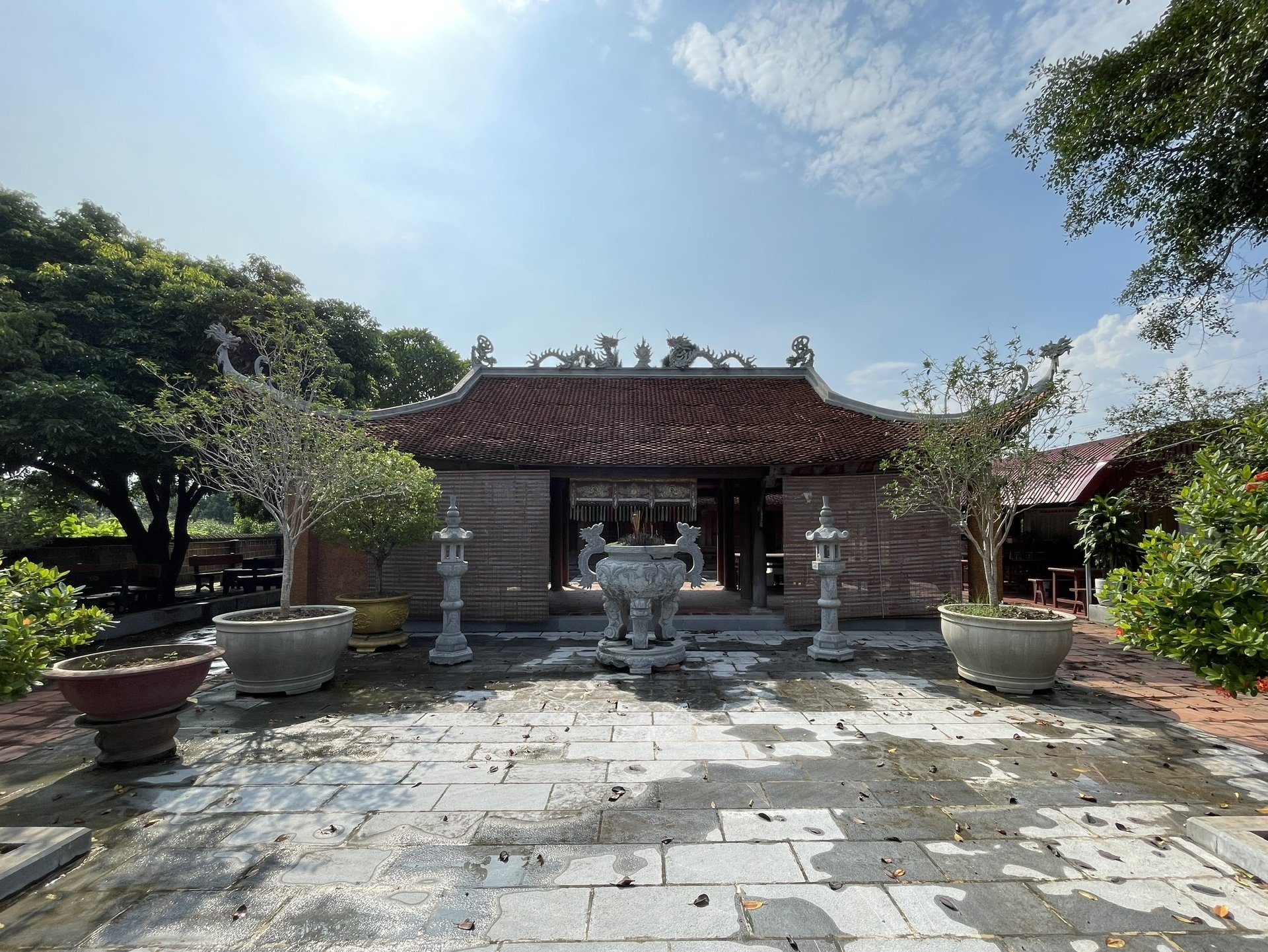
Through centuries of change, My Tu Temple has preserved a rich system of relics and antiquities. Beside the three dignified ancient statues are two exquisitely carved wooden incense tables (one in Le style, one from the Nguyen era). The ritual objects also include an 18th-century glazed ceramic incense bowl, embroidered curtains, a van stand, a bronze gong, and a bronze censer.
In particular, the temple still keeps an invaluable treasure of Han-Nom heritage, including: 1 Han-character genealogy, 1 Nom-character genealogy, 2 stone steles for rear worship, collections of ancient ritual texts, and 2 intact Nguyen-era edicts. The worship space is made more splendid by the great plaque and six pairs of parallel sentences lacquered in vermilion and gilded or silvered, the most notable being the couplet praising the Holy Mother's merits:
"The Le dynasty granted edicts and many honorable titles; My Tu protects the southern sky,
Descending into the mortal world in glorious sacred power, she aids the nation and royal house."
Historical Marks and the Preservation Journey
Not only a spiritual mainstay, My Tu Temple was also a red address during the resistance. Throughout the anti-French period (1946–1947 and the temporary occupation phase), the temple was a safe evacuation site for the people, the secret working headquarters of the Tan Xa Commune People's Committee, and a storehouse for documents, weapons, and ammunition of the guerrilla forces and main-force troops.
To preserve this invaluable architectural heritage, in 2014, the Thach That District People's Committee established a project to restore and embellish the entire temple with a total investment of VND 12.96 billion. The restoration process was carried out methodically to preserve the ancient essence intact. On January 30, 2021 (the 18th day of the 12th lunar month of the Canh Ty year), the restoration project was officially inaugurated, restoring My Tu Temple to a spacious appearance. Today, the relic not only meets the religious needs of the people of Tan Xa but is also ready to welcome visitors and researchers to worship and learn about a brilliant cultural and artistic scenic site of the Doai region.